
Case studies / 03
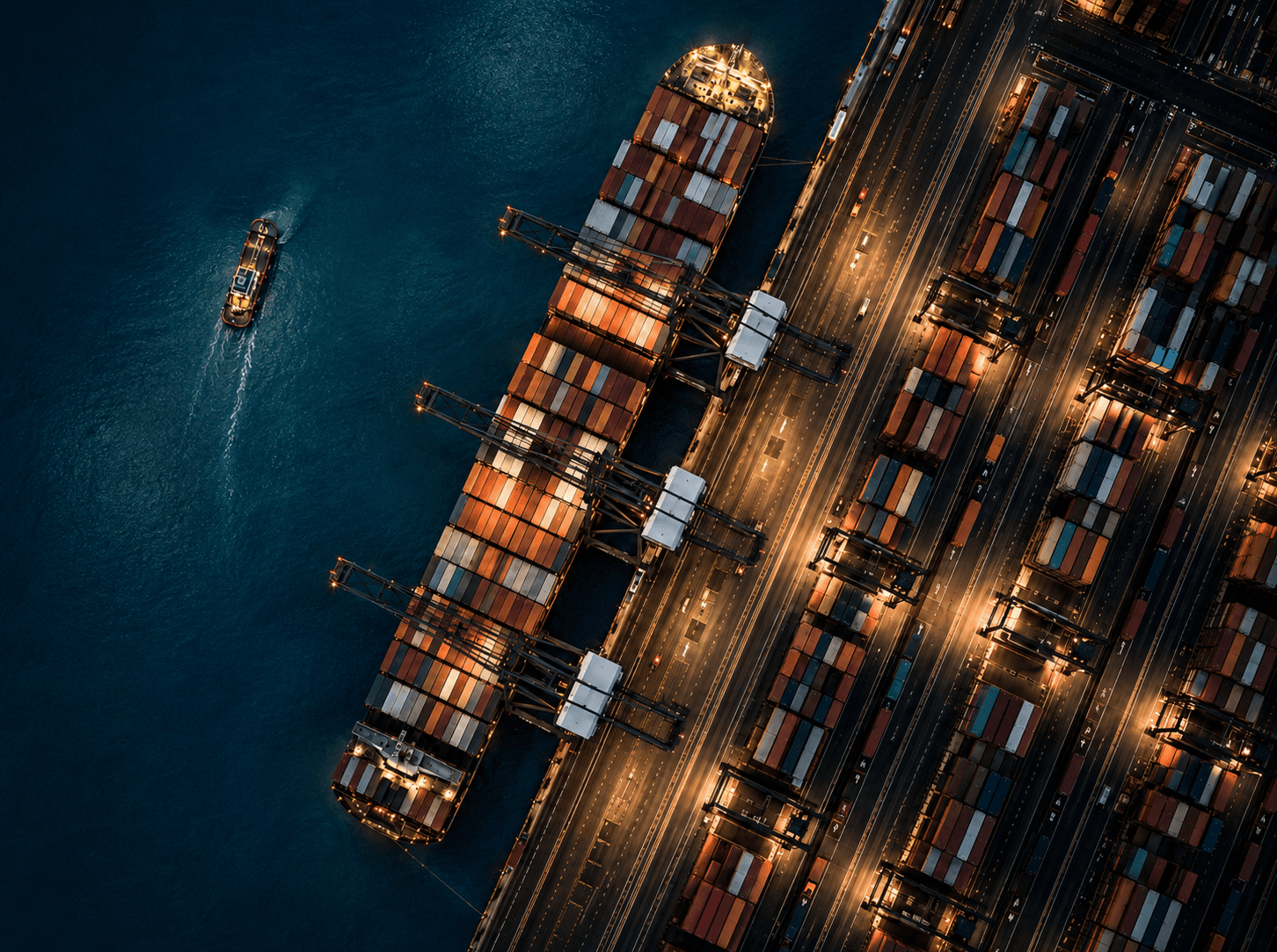
Port control system for one of the world’s largest companies, reducing over SAR 100M+ in port operational costs
- 100M+
- SAR Reduction in Port Operational Costs
Every vessel movement had to be coordinated across a constantly changing port
High-volume port operations depend on continuously coordinating vessels, berths, cargo, terminals, pilots, tug services, and regulatory requirements under changing operational conditions. The mandate was to build an intelligent operational system capable of optimizing vessel scheduling, berth allocation, queue sequencing, and turnaround planning to maximize throughput while reducing delays, congestion, and operating costs.
Operational decisions were continuously optimized before vessels reached the dock
The platform combined probabilistic vessel arrival forecasting, berth allocation optimization, queue sequencing, and forward-looking capacity simulation into a single operational planning environment. By continuously evaluating changing port conditions and operational constraints, it generated scheduling recommendations that improved berth utilization, reduced idle time, and maintained smooth cargo movement across the port.
Stable operations depended on validating every schedule before execution
Every scheduling recommendation was evaluated against operational constraints, berth eligibility rules, vessel characteristics, and safety requirements before execution. Simulation models tested schedule resilience under changing arrival patterns and operational disruptions, while every planning decision remained fully traceable to the underlying operational data and business rules.
The platform became part of the port's daily operating rhythm
Rather than functioning as a standalone optimization tool, the system became embedded within day-to-day port planning and coordination. Live vessel tracking, berth availability, cargo schedules, and operational events were continuously unified into a single planning environment, enabling planners to respond quickly to changing conditions while maintaining reliable and efficient port operations.